Strategies For Families
Families play an important role in supporting children’s social-emotional development and self-regulation. Co-regulation happens when adults help children work through emotions by staying calm, offering comfort, and guiding them through difficult moments. This support builds trust, emotional awareness, and healthy coping skills. Families can support self-regulation at home by using predictable routines, naming feelings, modeling calm behavior, practicing deep breathing, and helping children solve problems in simple ways. Cankaya et al. (2026) explain that “parental playfulness in everyday interactions is associated with children’s emotional regulation” (p. 48). The authors also describe how adults can scaffold children’s learning by “modelling, leading and coordinating the social interaction” (Cankaya et al., 2026, p. 48). When families and teachers use similar routines, language, and calming strategies, children receive consistent support at home and school. This consistency helps children feel secure and gives them repeated opportunities to practice self-regulation in different settings.

Infants
For infants, families can support social-emotional growth by responding to cries, using a calm voice, holding and comforting the baby, and creating consistent feeding and sleeping routines. This helps infants feel safe and build trust.

Toddlers
For toddlers, families can help by giving simple choices, labeling emotions, using short phrases like “You feel mad,” and practicing calming strategies such as hugging a stuffed animal or taking deep breaths. This helps toddlers begin managing big feelings and impulses.
Early Childhood
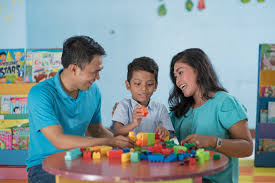
For early childhood, families can encourage children to use feeling words, talk through problems, wait for turns, and practice calming down before reacting. These strategies help children build independence, confidence, and stronger relationships.
Create Your Own Website With Webador